
In the third quarter of 2026, stocks generally remained positive, while bonds fell sharply in value. One important reason was rising interest rates. Two reasons are often cited for this: high inflation and concerns about government deficits.
Global stocks rose in the third quarter. Many companies reported earnings growth, even as borrowing became more expensive. Confidence in artificial intelligence (AI) also helped. However, some parts of the market lagged. Emerging-market stocks made little progress. The strong rise in Korean and Taiwanese chip companies in the first half of the year did not continue. European stocks fell slightly. Stocks of relatively small companies, also known as small caps, also lost value, particularly in the United States. There are two possible explanations. Small-cap stocks had risen sharply in the first half of the year, prompting some investors to take profits. In addition, smaller companies are often more affected by rising interest rates because they tend to borrow more.
Bonds had a difficult quarter. A bond is a loan to a government or company on which you receive interest. Interest rates on new loans rose in many countries to their highest levels in years. For example, the yield on a ten-year loan to the U.S. government reached its highest level since 2007. In Germany, that yield was the highest since 2011. When interest rates rise, the prices of existing bonds fall. New bonds then offer more interest, making older bonds less valuable.
Government bonds are normally considered one of the calmer parts of a portfolio. This quarter, they were hit hardest. The euro government-bond fund fell 4.31 percent. Corporate bonds and high-yield bonds fell less. Money market funds did rise, by 0.59 percent. These are very short-term loans, so rising interest rates have a smaller effect on them. Their returns rise along with interest rates.
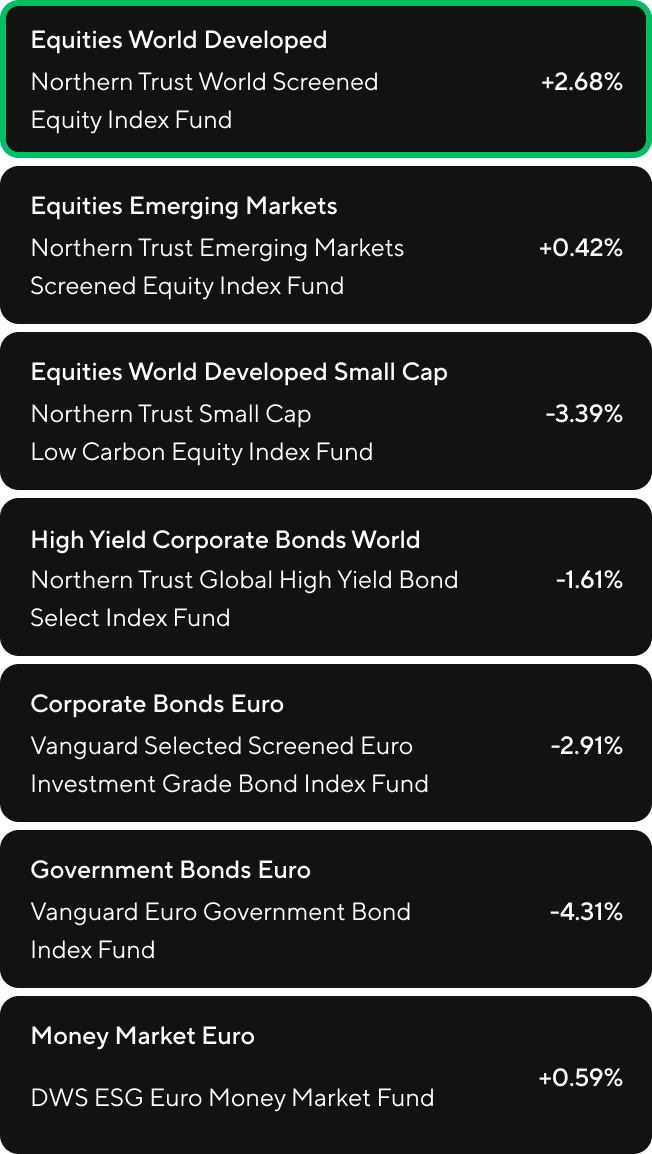
Rising interest rates were the main story of this quarter. But why did rates rise?
This was due to a combination of several factors, but one important factor was inflation. The conflict in the Middle East flared up again, driving up oil prices. As a result, inflation remained high. In the eurozone, it was 3.2 percent in August. Central banks therefore raised interest rates to counter inflation. The U.S. central bank did so in September for the first time since 2023. The European Central Bank (ECB) raised its rate to 2.5 percent, its second increase this year. They were able to do this because the economy remained stronger than expected. The labor market stayed healthy, making the risk of an economic contraction seem small. That same strong economy also helps explain why stocks continued to perform well.
A second factor is investors’ growing concern about government deficits. Many governments spend more than they bring in and borrow the difference. The more a government borrows, the more interest investors demand as compensation for the risk. For example, the gap between French and German interest rates widened to its largest since 2012, partly because of France’s large deficits.
This quarter showed that bonds are not always the safe haven many investors expect. In a diversified portfolio, rising stocks offset some of the decline in bonds. Smaller companies also lagged. That is why diversification in your portfolio remains important: you cannot know in advance which part will lag next quarter.
Quarters like this are exactly when it becomes clear why having a well-defined strategy is useful. No one knows in advance which investment category will perform best. That is why we create a plan that fits your goals and circumstances, and that you can adjust if they change. This way, you do not have to gamble on getting the timing right.
You do not achieve an investment goal of ten or twenty years with a single good or bad quarter. Give your investments time by continuing to contribute and aligning your risk with what you need.
Investing involves risk. You may lose some or all of your investment. Past performance is no guarantee of future results. Returns are in euros, after fund costs.