
After a strong first quarter, the financial markets showed a mixed picture in the second quarter of 2024. Equities experienced a turbulent period after their good start. Bonds continued to perform poorly, which was partly due to persistent inflation and high interest rates.
The second quarter of 2024 has once again demonstrated how volatile the financial markets can be. While the first quarter of 2024 was primarily characterised by optimism and high returns in the stock market, this did not last long. In the second quarter, we saw that the sentiment shifted towards a more negative outlook.
The second quarter of 2024 in Europe was dominated by politics. The outcome of the European elections, and the subsequent parliamentary elections in France. This resulted in a drop in share prices. However, the prices of American shares were not affected by this. These rose last quarter, mainly due to sustained enthusiasm surrounding Artificial Intelligence (AI). Shares in emerging markets generally had a strong quarter.
Due to persistent high inflation, it was expected that central banks would implement fewer interest rate cuts. The Federal Reserve, the central bank of the US, chose not to adjust the interest rate and announced only one interest rate cut, two fewer than anticipated in March.
The European Central Bank, however, did announce an interest rate cut in June despite persistent inflation figures.
As a result, bonds became less attractive. This is because the interest rate on bonds falls when the general interest rate falls. With an interest rate cut, bonds with the old, higher interest rate become more valuable.
The return on creditworthy bonds from governments and large companies is highly dependent on the interest rate.
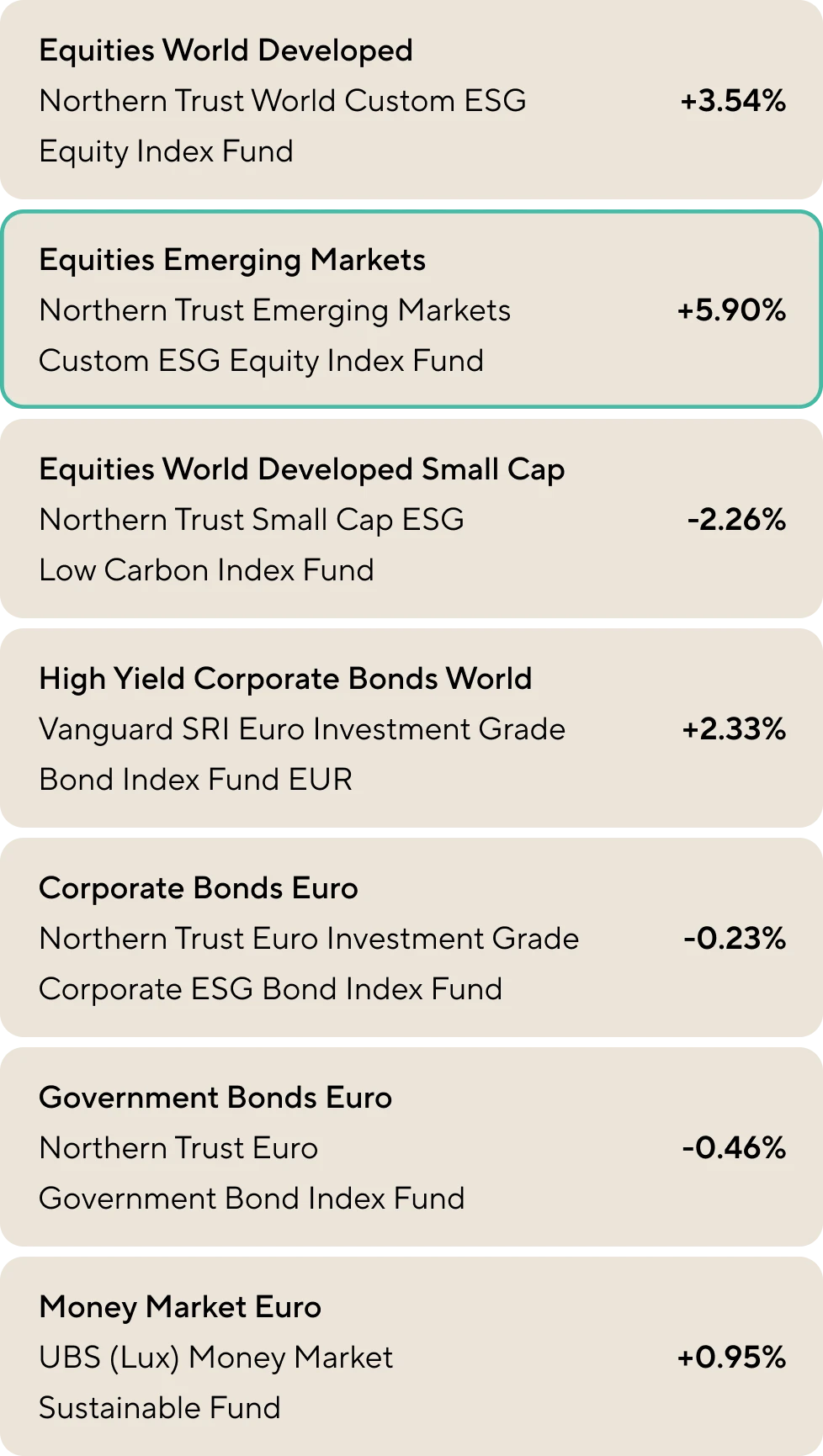
Central banks keep interest rates high to reduce inflation, which leads to lower returns on creditworthy bonds. High yield corporate bonds still performed well.
Best fund performance in the second quarter of 2024:Northern Trust Emerging Markets Custom ESG Equity Index Fund + 5.90%
The second quarter once again showed how changeable the market can be. The market reacts to external news, including the outcome of the elections in Europe. This can cause sentiment about the financial market to change quickly. However, predicting exactly when the stock market will fall or rise proves virtually impossible. It currently appears that the market has started an upward trend again, but this can never be said with certainty.
That is why our advice remains the same. Do not adjust your portfolio based on short-term market changes. The Vive investment model ensures that your portfolio is as well diversified as possible across different financial products (bonds, funds, equities, et cetera) for your risk level. This way, these types of changes have little effect on your portfolio in the long term.
Do not let the market disrupt your long-term goals.
Continue to follow your goals and only adjust your portfolio if your personal situation changes, not based on market changes or sentiment. Sticking to your investment strategy with a well-diversified investment portfolio remains the key to long-term success. Check how your risk level is set in the app and keep an eye on your investment plan to continue achieving your long-term goals.