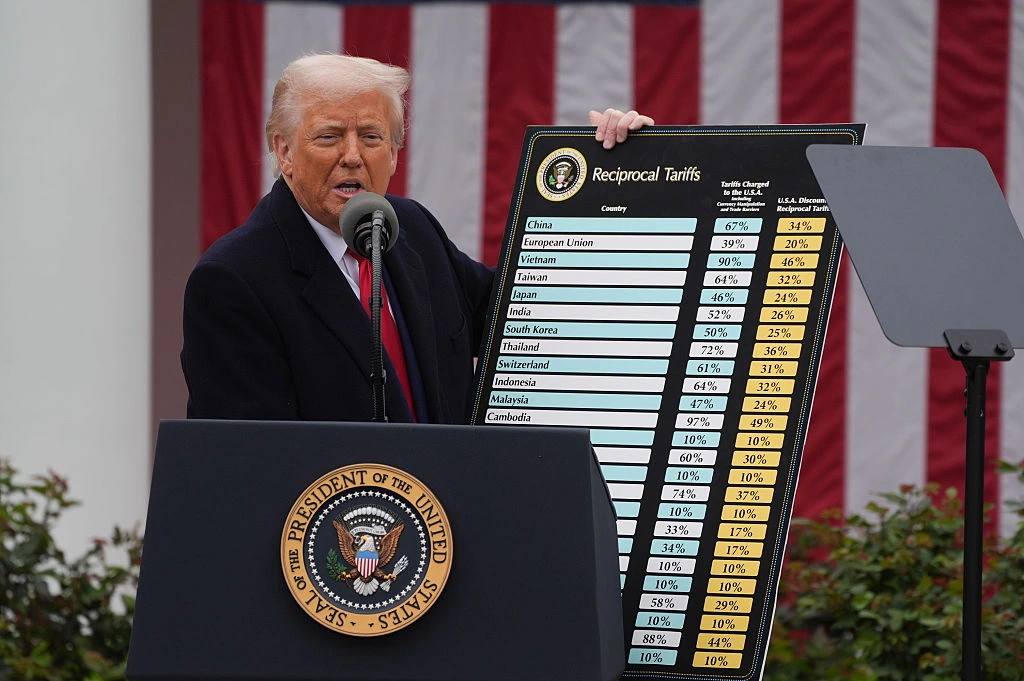
The first quarter of 2025 was challenging for financial markets. The year started moderately positively, but uncertainty surrounding US trade policy had a major impact on global equity and bond markets. In Europe, announcements of large-scale government spending attracted attention, with implications for bond markets.
The year 2025 got off to a surprising start. The unexpected launch of a powerful new AI chatbot by the Chinese company DeepSeek on 10 January immediately caused a stir in the technology, AI and semiconductor sectors. This innovation called into question the perceived dominance of American technology companies, which rely heavily on high levels of investment and advanced semiconductor chips. While President Trump’s inauguration initially generated some optimism, sentiment shifted significantly in March due to the threat of new import tariffs from the US government.
Europe, on the other hand, experienced a revival. European Commission President Ursula von der Leyen announced plans for nearly €800 billion in defence spending. In addition, Friedrich Merz, the new German chancellor-designate, presented an ambitious €500 billion infrastructure programme, supplemented by increased defence spending. These investments are expected to boost the growth of European companies across various sectors. However, these plans also put pressure on European government bond prices due to the financing through new borrowing. This led to lower bond prices and negative effects on funds that invest in them.
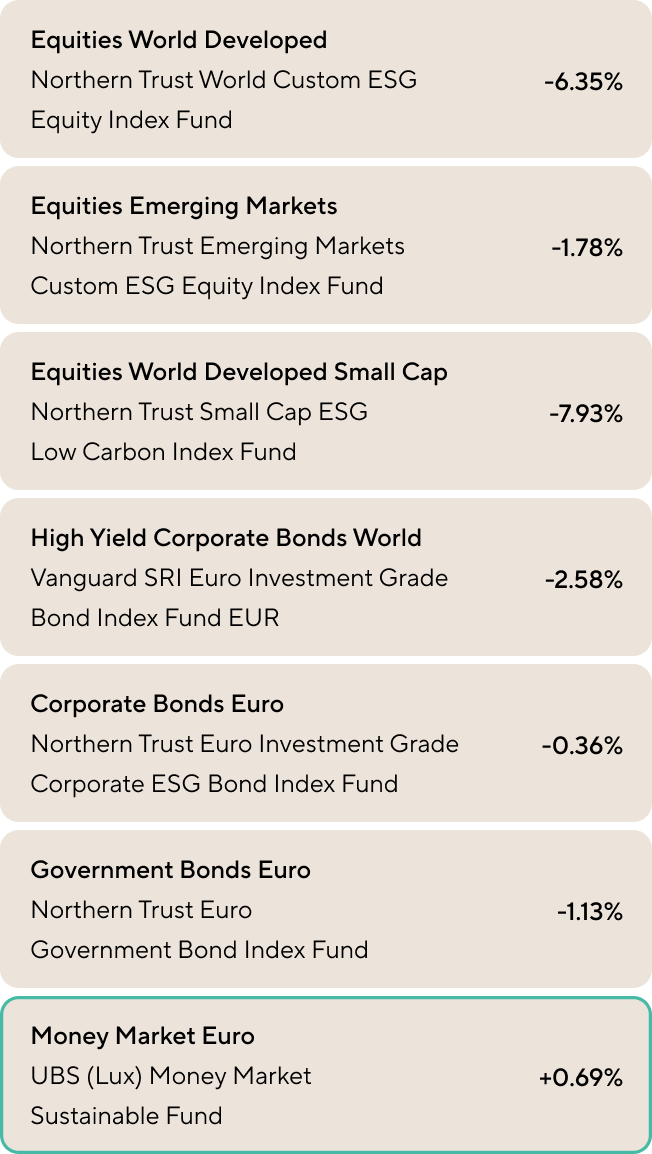
The quarter ended with a sharp correction, particularly noticeable in US equities. The combination of uncertainty surrounding US trade policy and doubts about US leadership in AI, reinforced by the introduction of DeepSeek, created negative market sentiment. The dollar’s exchange rate against the euro fell by around 5%, resulting in additional negative returns on US investments when measured in euros.
Capital partly flowed out of US equities and into European markets. This is because European shares have for years offered a more attractive relationship between share prices and company earnings. US shares, by contrast, are on average more heavily weighted towards so-called growth stocks: companies with higher valuations relative to their current earnings, based on expectations of strong future growth. During periods of heightened uncertainty, these growth stocks are generally hit harder because much of their expected growth is already priced in.
The combination of capital flows into Europe and large-scale investment plans created optimism across European markets. While this helped to restore some balance in global equity markets, the US remains by far the largest market. As a result, European stock markets were only able to partially offset the global market decline.
Our advice: stick to your strategy
Despite the negative quarter, this period clearly demonstrates the strength of a well-diversified portfolio. While US shares delivered negative returns, European shares provided some compensation with positive performance. The overall return was nevertheless negative, mainly due to the heavier weighting of US shares in global indices.
Our message therefore remains unchanged: do not be swayed by temporary market movements. The Vive investment model ensures that your portfolio is optimally constructed to match your risk profile. Stay focused on your long-term objectives. Do not allow short-term market fluctuations to throw you off balance. Keep your personal financial goals clearly in sight and adjust your portfolio only when your personal circumstances change, not in response to short-term market movements. A wide range of options is available.